On Vacant Lakefront Lots in Mooresville, the Dock Isn't Included Anymore
September 17, 2026
September 17, 2026
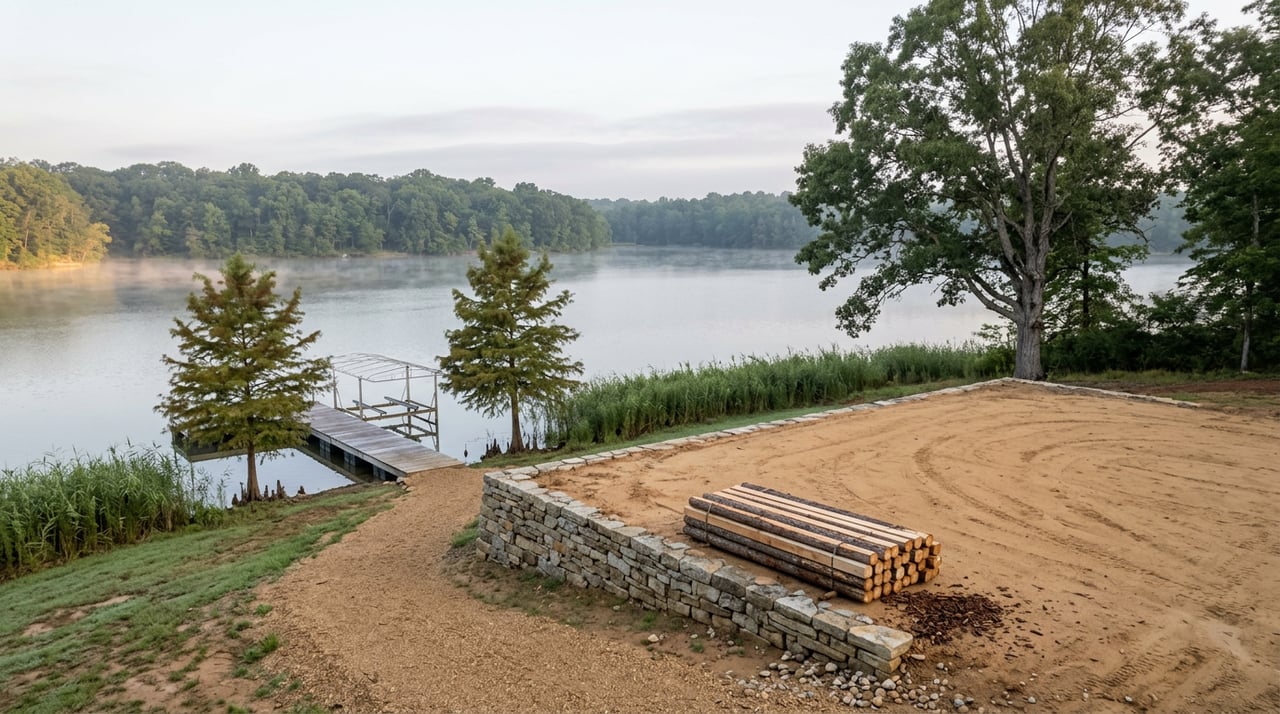
Picture a half-acre lot on the west side of Mooresville, no house on it yet, priced at a premium because the listing mentions a dock already sitting in the water. That combination, raw land plus an existing dock, has been one of the more common ways vacant lakefront parcels get marketed around Lake Norman. The dock does a lot of selling work. It tells a buyer they can close, keep the boat in the water while the house goes up, and skip a permitting headache that trips up everyone else.
As of July 1, 2026, that assumption doesn't hold the way it used to. Duke Energy, which controls every dock, pier, and shoreline structure on the lake under its federal hydroelectric license, changed how it processes private dock applications. The company will no longer review a private dock application on a lot where no home has been built. The change applies to every Duke Energy lake, not just Lake Norman, and it's specific to new dock permits. Shoreline stabilization, riprap, seawalls, and similar work fall outside the rule and still move through the standard review.
Mooresville feels this first because of geography. The town wraps around the northern and eastern shores of Lake Norman, giving it the longest continuous stretch of lakefront of any town on the lake. More shoreline means more vacant parcels, and a meaningful share of those parcels are marketed the same way: bring your builder, the dock is already there. That pitch just got more complicated.
The mechanics matter here, because the difference between "dock permitted" and "dock permittable" is now the whole ballgame on a vacant lot.
Before July 2026, a buyer or seller could submit a new dock application, or initiate a transfer of an existing permit, through Duke's Lake Access Permit System regardless of whether a house sat on the adjoining land. Investors who wanted to hold a lot for a year or two before building could still get the dock squared away early, and a buyer closing on raw land could start that process the same week as closing.
That sequence is broken now for new applications. A vacant lot with no home on it is not a lot Duke will review a fresh dock application for, full stop. What's less settled, and worth confirming directly with Duke's Lake Services before you write an offer, is whether the same hold applies to permit transfer requests on a dock that was already permitted under a previous owner. Both new applications and transfers route through the same online system, so treat the more conservative reading as the working assumption until a Lake Services representative tells you otherwise for your specific parcel.
| Scenario | Before July 1, 2026 | Where it stands now |
|---|---|---|
| New dock, no home built yet | Application could be submitted and reviewed | Duke will not review it until a home exists on the lot |
| Existing permit, needs to transfer to a new owner of a vacant lot | Processed through the standard transfer request | Likely subject to the same home-on-lot threshold; confirm directly with Lake Services |
| Shoreline stabilization on a vacant lot (riprap, seawall) | Reviewed under standard process | Unchanged, the rule is dock-specific |
| Buyer plans to use the dock while the house is under construction | Common assumption baked into vacant-lot marketing | A real gap now exists between closing and any Duke-approved dock work, unless the permit was fully transferred before July 2026 |
The practical effect is that the two-track path buyers used to run, land now and dock now, house later, has collapsed into one track: house first, then dock.
If you're under contract on a vacant Mooresville lot that's marketed with a dock, the conversation with your seller and your agent needs to go further than "does it have a dock." A few questions do the real work here.
That last point deserves real numbers, because "eventually" isn't a plan.
Custom home permitting in Mooresville runs 5 to 9 weeks for a clean first submittal inside town limits as of 2026, and 4 to 8 weeks for parcels in unincorporated Iredell County, where a separate planning department handles review. From there, a typical custom build in Mooresville runs 10 to 14 months from groundbreaking to move-in, with lakefront sites often landing at the longer end once shoreline work, retaining walls, or complex foundations enter the picture. Vertical construction costs in the Iredell/Lake Norman corridor run $350 to $600 per square foot as of 2026, with lakefront and complex-foundation projects toward the top of that range.
Add it up and a buyer closing on a vacant lot today, planning a typical custom home, is looking at something closer to a year and a half before there's a structure on the lot that would even qualify the dock application for Duke's review, let alone before that review clears. That's not a reason to walk away from a vacant lakefront parcel. It's a reason to stop treating the dock as an amenity you get on day one and start treating it as a phase-two deliverable that your construction schedule controls.
Does this affect docks that are already permitted and in the current owner's name? The rule is about applications, new construction or modification requests, that Duke won't review until a home exists. A dock with a clean, already-transferred permit isn't automatically affected, but any future request to modify, repair beyond routine maintenance, or relocate it would likely run into the same hold.
What if I want to build a seawall or add riprap before construction starts? That's a different track. Duke's July 2026 change is specific to private dock permits. Shoreline stabilization requests still move through the standard review regardless of whether a home is on the lot.
Can I just ask the seller to handle the dock permit before I close? You can ask, and it's worth asking, but the seller can only request a permit transfer into their own name, not a new dock permit application if none exists, since their lot is presumably also vacant. If there's no existing permit at all, that transfer conversation doesn't apply and you're back to waiting for a home to exist.
Does this apply to lake-access lots without direct shoreline, where the dock sits on a separate parcel or shared easement? Duke's public guidance draws the line at whether a home has been built on the adjoining lot, and shared-dock or easement arrangements add another layer worth confirming directly with Lake Services, since your specific configuration may not fit the standard scenario cleanly.
A vacant lakefront lot is still one of the more interesting plays on Lake Norman, especially in a town with as much continuous shoreline as Mooresville. The dock just isn't the thing you can take for granted anymore. It's the thing your construction schedule now controls.
If you're evaluating a vacant lakefront parcel in Mooresville, or anywhere along the Lake Norman shoreline, and want a second set of eyes on what the dock situation actually looks like before you write an offer, Scott Cervo brings three decades on both the construction and brokerage side of these deals. Request a private valuation and consultation before your due diligence clock starts running.
Stay up to date on the latest real estate trends.