Eyeing a waterfront home in Huntersville or planning an upgrade to your current dock? Choosing the right dock and lift on Lake Norman can feel complex, especially when you factor in wakes, water levels, and permits. You want a solution that protects your boat, enhances daily use, and stands up to local conditions. In this guide, you’ll learn the key differences between fixed and floating docks, the best boat lifts for common vessel types, expected costs and maintenance, and what approvals you need around Huntersville. Let’s dive in.
Lake Norman realities in Huntersville
Lake Norman is a Duke Energy–managed reservoir with water levels that fluctuate over the year. Weekends and holidays see heavy boat traffic, which raises wake exposure, especially near the main channel. Your dock choice should reflect those conditions.
- Water levels: Fluctuation favors floating docks or fixed docks with piles tall enough to accommodate seasonal swings.
- Wake exposure: Main-channel frontage experiences stronger wakes. Many coves in Huntersville are calmer but can still see sizable waves from larger boats.
- Shoreline and bottom: Near-shore substrate ranges from sand and silt to clay, rock, or bedrock. This affects pile-driving methods and anchoring.
- Weather and debris: Ice is infrequent, but storm-driven debris, wind, and high-water events can shift or stress structures.
Fixed vs. floating docks
Fixed (pile) docks
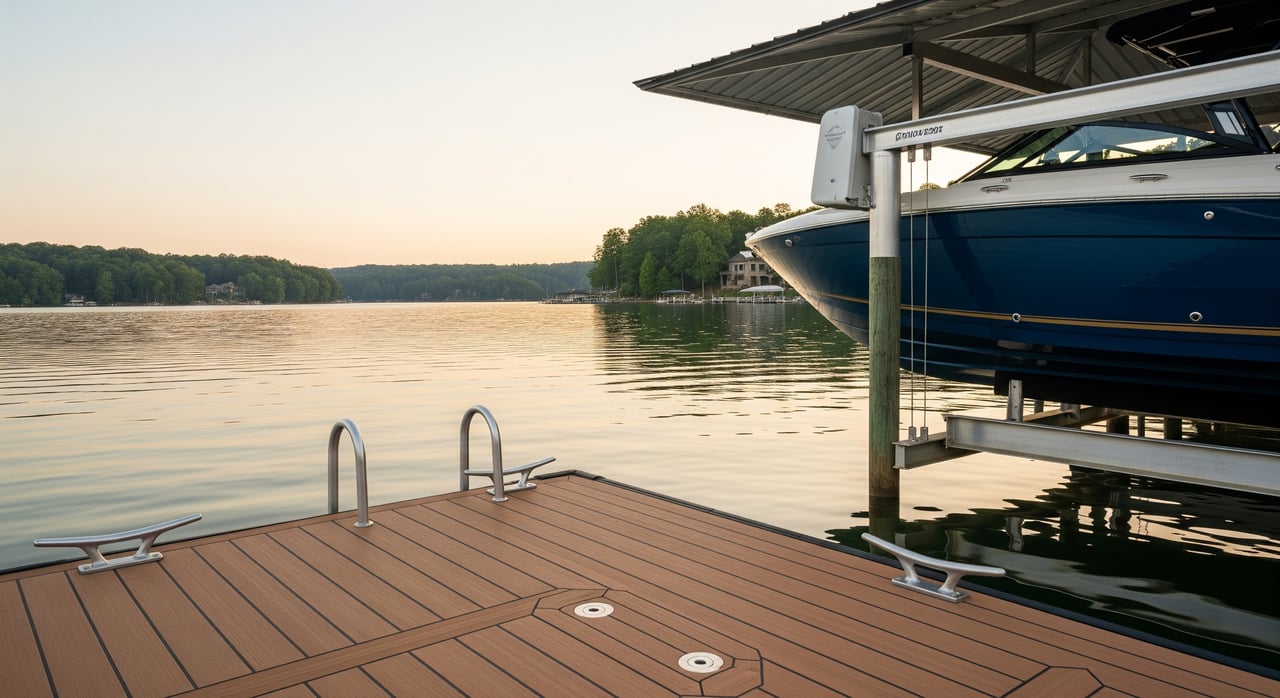
Fixed docks are built on driven or drilled piles, creating a rigid platform above the water. They offer a stable walking surface and excel in locations with strong wakes or heavy traffic. With quality materials and design, they can have a long service life.
The tradeoffs are higher initial cost and a more involved installation. Piles must be long enough to account for water level changes, and modifications later can be more complex and costly.
- Typical materials: Pressure-treated wood piles, steel H-piles, or concrete; decking in treated lumber, hardwoods, or composite.
- Maintenance: Inspect piles for rot or corrosion, refinish or replace decking as needed, and use marine-grade stainless or hot-dipped galvanized hardware.
Floating docks
Floating docks ride on buoyant modules and connect to shore with a ramp. They self-adjust to water levels, which is helpful on a managed reservoir. Installation is usually faster and less costly than a fixed dock, and relocation or expansion is easier.
In exposed locations, a floating dock may feel less stable and can take more impact from wakes. Float modules also age with UV exposure and abrasion and will eventually need replacement.
- Typical floats: HDPE modular floats or foam-filled polyethylene or closed-cell composites.
- Maintenance: Annual checks of float integrity and connections, periodic hardware tightening, and cleaning to manage biofouling.
Quick fit: cove vs open water
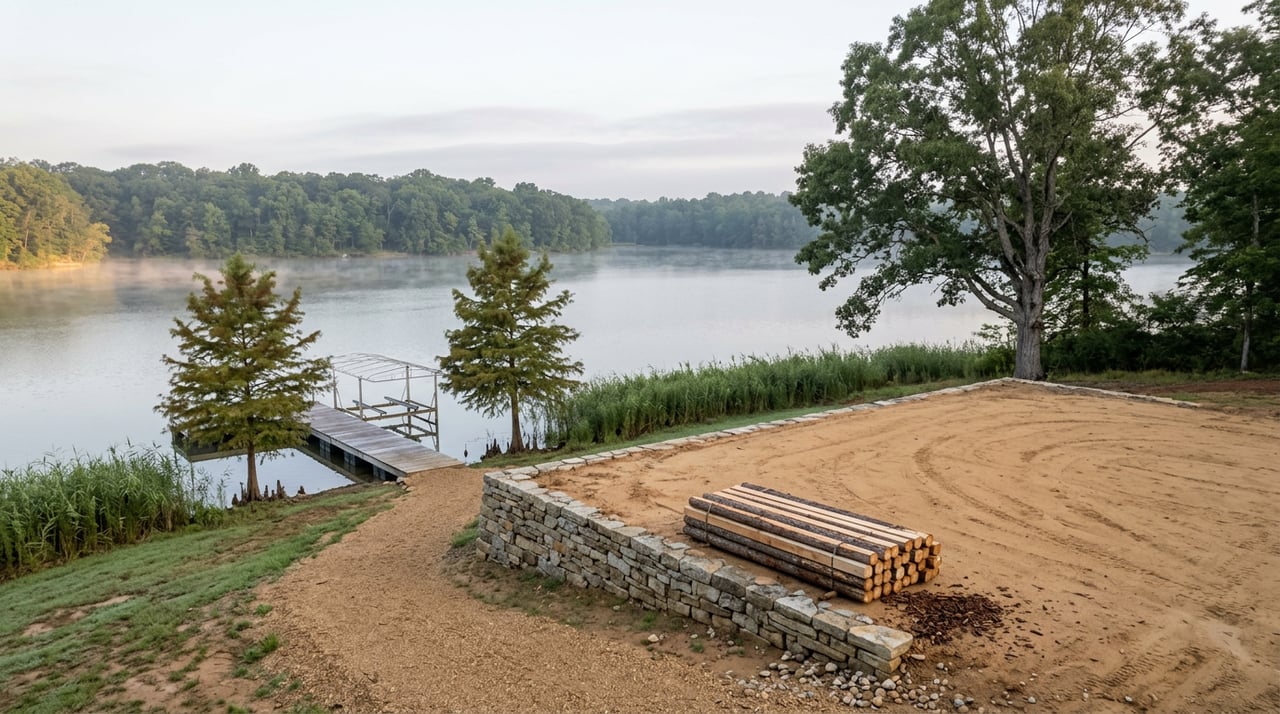
- Protected cove lots: Floating docks or shorter fixed docks are common, thanks to calmer water and easier boat handling.
- Open-water frontage: Robust fixed pile docks or heavy-duty floating systems with strong anchoring are favored to manage wakes.
Materials that last
Your material choices drive cost, feel, and lifecycle.
- Pressure-treated lumber decking: Lower upfront cost. Expect major rehab in about 8 to 15 years depending on exposure and maintenance.
- Capped composite decking: Higher initial cost with lower maintenance. Typical service life is 20 to 30 years or more.
- Aluminum framing/decking: Lightweight and corrosion-resistant with a long life, often 20 to 40 years or longer, at a premium price.
- Floats: HDPE modules often last 15 to 25 years, depending on UV exposure and impacts.
- Hardware: Use marine-grade stainless steel (316) or hot-dipped galvanized to resist corrosion.
Boat lifts explained
Lift types and best uses
- Roller or cable cradle lifts: Simple and economical. A good fit for moderate-sized boats when properly set up and maintained.
- Vertical lifts (hydraulic or electric): Lift straight up for faster loading and less hull immersion. A solid choice for larger powerboats and pontoons.
- PWC lifts: Compact, manual or powered units designed for jet skis. Affordable and space-efficient for personal watercraft.
- Cantilever lifts: Budget-friendly, older-style pivot systems. Less common for larger boats due to limited protection and capacity.
Picking for your boat
- 22 to 28 foot runabout: A standard cradle system or a vertical lift works well, sized to your boat’s length overall, beam, and weight. Vertical lifts offer comfortable loading and quicker operation.
- Pontoon or deck boat: A vertical or hydraulic lift with capacity to spare is often preferred for heavier hulls. Consider canopy options for added protection if wind conditions and anchoring allow.
Power, controls, and safety
Hydraulic lifts deliver smooth, powerful operation for heavier boats but require a power unit and periodic service. Electric winch systems are simpler and generally less expensive. Any powered lift should have wiring to code with GFCI protection and be installed by a qualified marine electrician.
Oversize lift capacity slightly to reduce stress on mechanical components and to allow for fuel and gear. Inspect cables, pulleys, and controls annually. Replace worn cables and maintain hydraulic fluid and seals as recommended.
Design and installation factors
Structure and anchoring
Your dock must support lift loads safely. Pile-mounted lifts transfer weight to the piles, while floating-dock lifts rely on robust framing and anchoring. On rocky or deep substrates, pile-driving can be more involved, which may impact schedule and budget.
For floating docks in exposed areas, increase anchoring capacity and consider orientation to reduce wave impact. Canopies add wind load and may require stronger anchoring.
Electrical and code items
Plan for safe electrical service with GFCI protection and proper conduit. Add lighting, receptacles for chargers, and clear labeling for switches as needed. Permitting for electrical work is typical, and all work should meet code requirements.
Access and daily use
Design for comfortable, safe access: adequate walkway width, non-slip decking, and secure cleats and ladders. Align the boat slip to minimize crosswinds and ease docking. Provide fender space and clear sightlines for entry and exit.
Costs and what drives them
Every shoreline is different, but these broad ranges can help you plan. Site complexity, materials, and access drive the final number.
- Small floating dock (10 to 20 ft): $5,000 to $15,000
- Medium floating dock (20 to 40 ft) with HDPE floats and basic decking: $15,000 to $40,000
- Fixed pile dock, basic build: $20,000 to $60,000 or more
- Premium fixed dock with composite or aluminum: $30,000 to $80,000 or more
- Boat lifts
- PWC lifts: $1,000 to $4,000 installed
- Standard cradle lifts for 2,000 to 6,000 lb boats: $4,000 to $12,000
- Hydraulic or vertical lifts for larger boats and pontoons: $10,000 to $30,000 or more
- Added costs
- Difficult piles or bedrock conditions
- Electrical service and trenching
- Crane or barge mobilization
- Long-term float replacement and routine repairs
Key cost drivers include dock size, decking type, float material, piling depth and methods, site access, lift capacity and complexity, and any engineering or permitting requirements.
Permits and approvals on Lake Norman
On Lake Norman, private docks and lifts involve multiple checkpoints. Start early and confirm requirements before design is finalized.
- Duke Energy Shoreline Management Program: Governs dock and lift placement, dimensions, and float standards. A Duke permit is typically required for private structures.
- Mecklenburg County and Town of Huntersville: Building, zoning, electrical, and any land-disturbance or stormwater reviews may apply.
- U.S. Army Corps of Engineers: Federal authorization may be needed if your project affects navigable waters, wetlands, or involves dredging or fill. Many small private docks qualify for general permits, but you should confirm.
- North Carolina Department of Environmental Quality: State freshwater and buffer rules can apply.
- HOA or deed restrictions: Neighborhood covenants may regulate size, style, or placement and often require HOA approval.
- Insurance carrier: Coverage for docks and lifts may require documentation and certain standards for anchoring and maintenance.
Practical tips: Obtain a site survey that shows shoreline footage, elevations, and distances to property lines. Engage a local marine contractor experienced with Duke’s program and Mecklenburg/Huntersville submittals. If near property boundaries or shared access, document neighbor agreements.
Care, maintenance, and lifespan
Plan for regular inspections to extend service life and reduce surprises.
- Annual: Inspect decking, fasteners, cleats, float integrity, wiring, and lift cables and pulleys. Tighten hardware and clean growth.
- Spring or after storms: Check for movement or damage, adjust anchoring, and confirm ramp connections.
- Every 3 to 7 years: Recoat or replace decking as needed. Service lift components, including cables and hydraulic fluid.
- Long-term expectations: Many mechanical components last 10 to 20 years with care. Full lift replacement can be 15 to 25 years or more, depending on exposure and use.
Safety first: Provide secure ladders and railings where appropriate, use non-slip surfaces, and post safety reminders. Confirm your homeowner’s policy covers dock and lift structures, and review marine coverage for your boat.
Smart next steps
If you are evaluating a Huntersville cove lot versus open-water frontage, start with how you plan to boat and how many vessels you need to accommodate. Gather your deed, any existing survey, and HOA rules. Note shoreline slope, access for construction equipment, and potential utility runs.
Next, speak with a local marine contractor for a site visit and preliminary design. Contact Duke Energy’s shoreline program and your town and county permitting offices for timelines and application needs. Request written estimates that separate design, materials, permitting, electrical, and mobilization so you can compare options clearly.
When you want an advisor who understands how dock design and lift capacity affect purchase decisions and resale value, connect with the local team that blends construction knowledge with market insight. For tailored, site-specific guidance or to evaluate a lakefront purchase, reach out to Scott Cervo Properties to request a private valuation and consultation.
FAQs
What dock type works best for a Huntersville cove lot?
- In most protected coves, a floating dock or a shorter fixed dock performs well thanks to calmer water and easier daily boat handling.
Which lift should I choose for a 22 to 28 foot runabout?
- A properly sized cradle lift or a vertical lift is common, with a slight capacity margin to account for fuel and gear for smoother, safer operation.
What lift is best for a pontoon on Lake Norman?
- A vertical or hydraulic lift sized to the pontoon’s weight and beam typically offers the best stability and clearance for heavier hulls.
How much will a new dock and lift cost?
- Broadly, expect $15,000 to $80,000 or more for the dock depending on type and materials, plus $4,000 to $30,000 or more for the lift based on size and complexity.
What permits are required around Huntersville?
- You will typically need approval through Duke Energy’s shoreline program, local permits through Mecklenburg County and the Town of Huntersville, and potentially federal or state sign-offs.
How much maintenance should I plan for each year?
- Budget for an annual inspection of decking, hardware, floats, and lift components, with cable and hydraulic service on a multi-year cycle and periodic decking replacement.
How do wakes and open-water exposure change dock design?
- On open water, choose a robust fixed dock or heavy-duty floating system with stronger anchoring and consider orientation or breakwater elements where permitted.